NBN Faults Explained: FTTN, FTTB, FTTC, FTTP and the Infamous Bridge Tap
Oct 13, 2026
If you've ever wondered why your NBN connection behaves the way it does — why speeds vary so wildly between premises, why some connections are rock solid and others drop out constantly — the answer usually comes down to one of three things: the copper, the cabling inside your premises, or your own equipment.
Let's break down the technologies, what goes wrong with them, and a few faults that trip up almost everyone who's never worked with this stuff before.
The NBN Technologies You've Probably Heard Of
FTTN — Fibre to the Node
Fibre runs to a cabinet somewhere in your street or neighbourhood. From there, the existing copper phone line carries the signal the rest of the way to your premises. The further you are from that cabinet, the more the signal degrades. This is why two houses on the same street can have completely different speeds.
FTTB — Fibre to the Building
Fibre runs to your apartment block or office building. From there, existing internal wiring carries the signal to each unit. The fibre part is fast. The internal wiring is often the weak point — especially in older buildings where the cabling was never designed for data.
FTTC — Fibre to the Curb
Fibre runs to a small distribution box near your property boundary, then the last stretch uses the existing copper lead-in. Generally more reliable than FTTN because there's less copper involved, but that last stretch can still cause problems.
HFC - Hybrid Fibre Coaxial
HFC has very high speeds but is still old technology. We find it has higher latency than full FTTP which is something that is not often mentioned.
FTTP — Fibre to the Premises
Fibre runs all the way to your premises. No copper in the access network at all. This is the technology everyone wants, and for good reason — it's the most reliable and the least susceptible to the faults we're about to talk about.
And with the NBN free fibre upgrade program rolling out across Perth, more and more premises are making the switch from FTTN and FTTC to FTTP. If your area is eligible, it's worth doing — but it's not a magic fix for everything, and it's worth understanding why.
The Free Fibre Upgrade — What It Actually Changes
The upgrade replaces the copper in the access network with fibre. That eliminates a whole category of faults outright: bridge taps, degraded copper, water in joints, distance-based speed loss. On the NBN side, it's a genuine improvement.
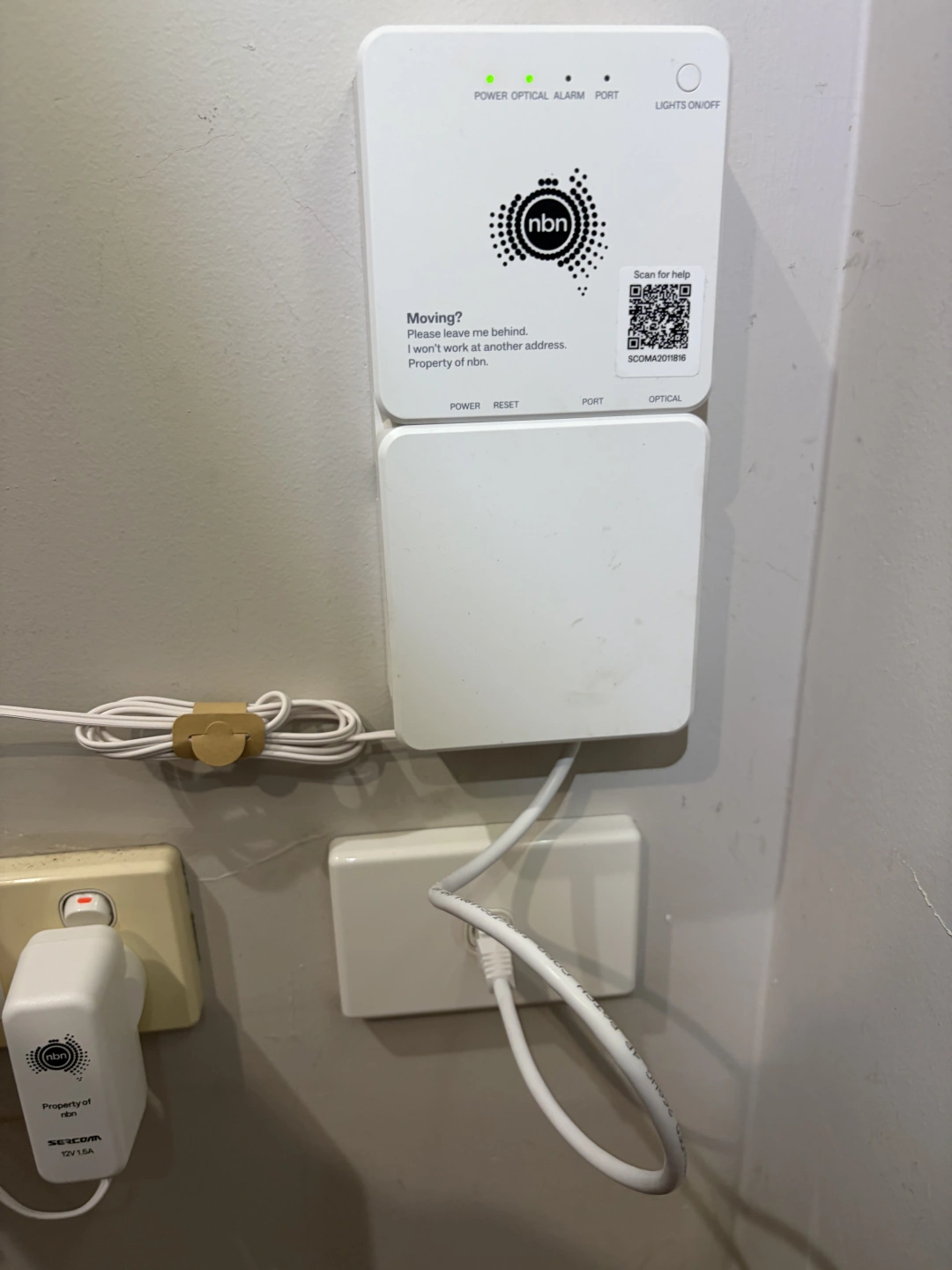
But here's what people don't realise: the upgrade doesn't touch anything inside your premises. The fibre terminates at an NTD — the NBN box — and from there, everything is the same as it was. The cable to your router, the router itself, your Wi-Fi, and any internal wiring in an apartment building all stay exactly as they were.
So if you had a fault inside your premises before the upgrade, you'll still have it after. And plenty of people upgrade, expecting the problem to vanish, and find it hasn't. The copper's gone — but the fault was never in the copper.
So Why Do People Still Have Faults on FTTP?
This is the part most people don't expect.
On FTTP, NBN's responsibility ends at the network termination device inside your home or business. From there, it's a cable to your router, and then your router's Wi-Fi to your devices. And a huge proportion of FTTP faults live in exactly that space:
The ethernet cable between the NTD and the router. Often, your NTD is in the garage and you want the Wi-Fi router inside for the best speeds.
Sometimes it's a long run. Sometimes it's been run badly. And sometimes it's been joined — extended, spliced, repaired, or daisy-chained with multiple couplers.
Every join in a data cable introduces signal loss and reflection. On a short run, one join might be survivable. On a long run with two or three joins, you're degrading the connection before it even reaches your router. The symptoms look exactly like an NBN fault: dropouts, reduced speed, instability. But the NBN side is fine — the problem is the patch lead.
The router itself.
A surprising number of faults come down to the router — failing, outdated, or simply unable to handle the connection. Providers hand out basic units, and they do the job until they don't. When they start dropping out under load, overheating, or losing their WAN link, it looks like an NBN problem but isn't.
Wi-Fi.
This is the big one. Most people experience "internet problems" that are actually Wi-Fi problems — weak signal, congested channels, interference from neighbouring networks, poor router placement, or a building full of competing access points. The connection to the premises might be perfect. The connection to your laptop isn't.
What Is a Bridge Tap?
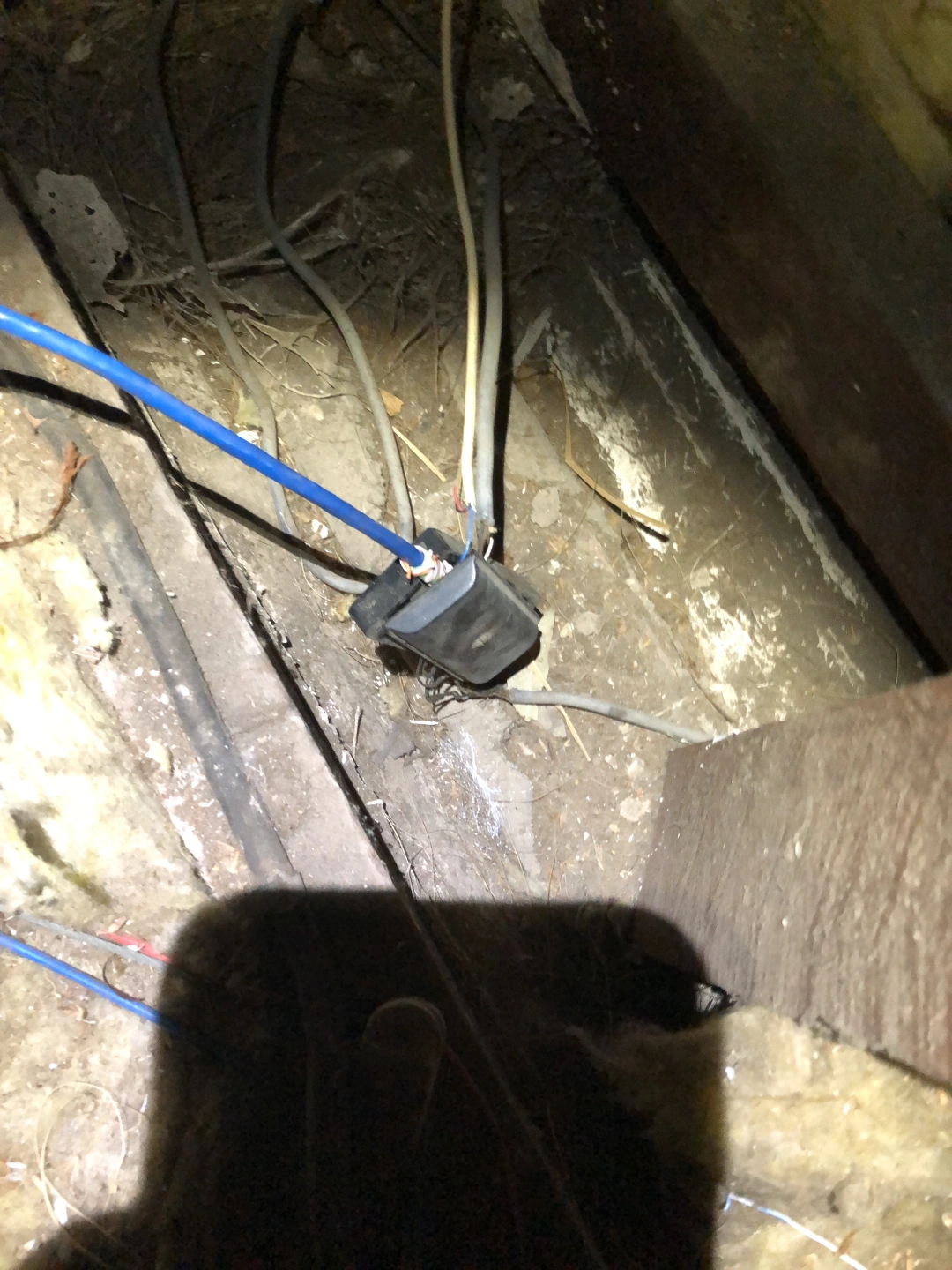
A bridge tap is a length of unused copper wiring that's still connected to your active line.
On FTTP it's irrelevant — there's no copper in the access network. But on FTTN, FTTB and FTTC, it's one of the most common and most overlooked faults out there.
A bridge tap can be:
· An old phone socket in a room nobody uses anymore
· Wiring left over from a second phone line that was disconnected years ago
· A junction point in a riser, ceiling space or under the floor with cables running nowhere
· Original cabling from when the building was constructed that was never removed
· In apartments, legacy cabling running to other units or old common-area sockets that were never properly isolated
To your internet signal, that unused wire isn't invisible. The signal travels down it, reaches the dead end, reflects back, and returns as noise. The longer the unused length, the more noise it introduces. And in a building, those lengths can add up fast — one unit's line can be carrying the redundant weight of wiring that was never meant to be there.
The practical effects:
· Lower sync speed — the line connects at a slower rate than it otherwise could
· Dropouts — the connection loses sync and re-establishes
· Instability — speeds fluctuate, latency spikes, particularly under load
· Problems that don't go away on their own
A bridge tap is essentially a dead-end street your signal keeps driving down, over and over.
How These Faults Get Found
Finding a bridge tap isn't guesswork. It's measurement.
Test equipment can determine the electrical length of a line — how much copper is actually connected. If a line measures significantly longer than the physical distance it should be, that's a strong indicator something is connected that shouldn't be.
From there, it becomes a process of elimination: tracing wiring, checking sockets, inspecting junction points in risers, ceiling spaces and under floors. In some cases, a single premises can have hundreds of metres of surplus cabling attached to the line — legacy wiring from extensions, old second lines, or original build cabling that was simply left in place. In apartments, it's often worse, because the cabling runs through shared spaces and nobody's ever gone back to clean it up.
Removing it is often unglamorous work. But it's the difference between a connection that struggles and one that performs the way it should.
The Thing About Joins
One pattern comes up again and again: cabling that's been joined unnecessarily.
Sometimes it's the occupant. Sometimes it's a previous technician. And yes — sometimes it's another business that's been out to "fix" the connection and added a join without realising what it does to the signal.
On a phone line, a join is often tolerable. On a data cable, it's a disruption. Every join adds loss, adds reflection, and adds a point of failure. A cable that's been joined three times to avoid running one new length properly is a cable that's going to cause problems eventually.
The frustrating part is that the fix is usually simple — run a single, unbroken cable of the correct length from the NTD to the router, and the fault disappears. But it requires knowing to look there in the first place.
Why This Matters
The NBN rollout handed a lot of premises a connection that technically worked, but didn't perform. Sometimes that's the copper in the access network. Sometimes it's the wiring inside the building. Sometimes it's the patch lead. Sometimes it's the router. And sometimes it's just the Wi-Fi.
The free fibre upgrade fixes the copper problem — but only the copper problem. Everything past the NTD is still yours to get right.
Knowing the difference is the hard part — and it's the part that determines whether you're paying for the right fix or chasing the wrong one.
Understanding the technology, knowing what a bridge tap is, and recognising the difference between a copper fault, an internal cabling fault, and a congestion issue won't fix anything on its own. But it does mean you'll know what you're actually dealing with — and what kind of help you need.